

News & Media
Mist, Mountain, and Memory: The RooJI Moutain Terroir

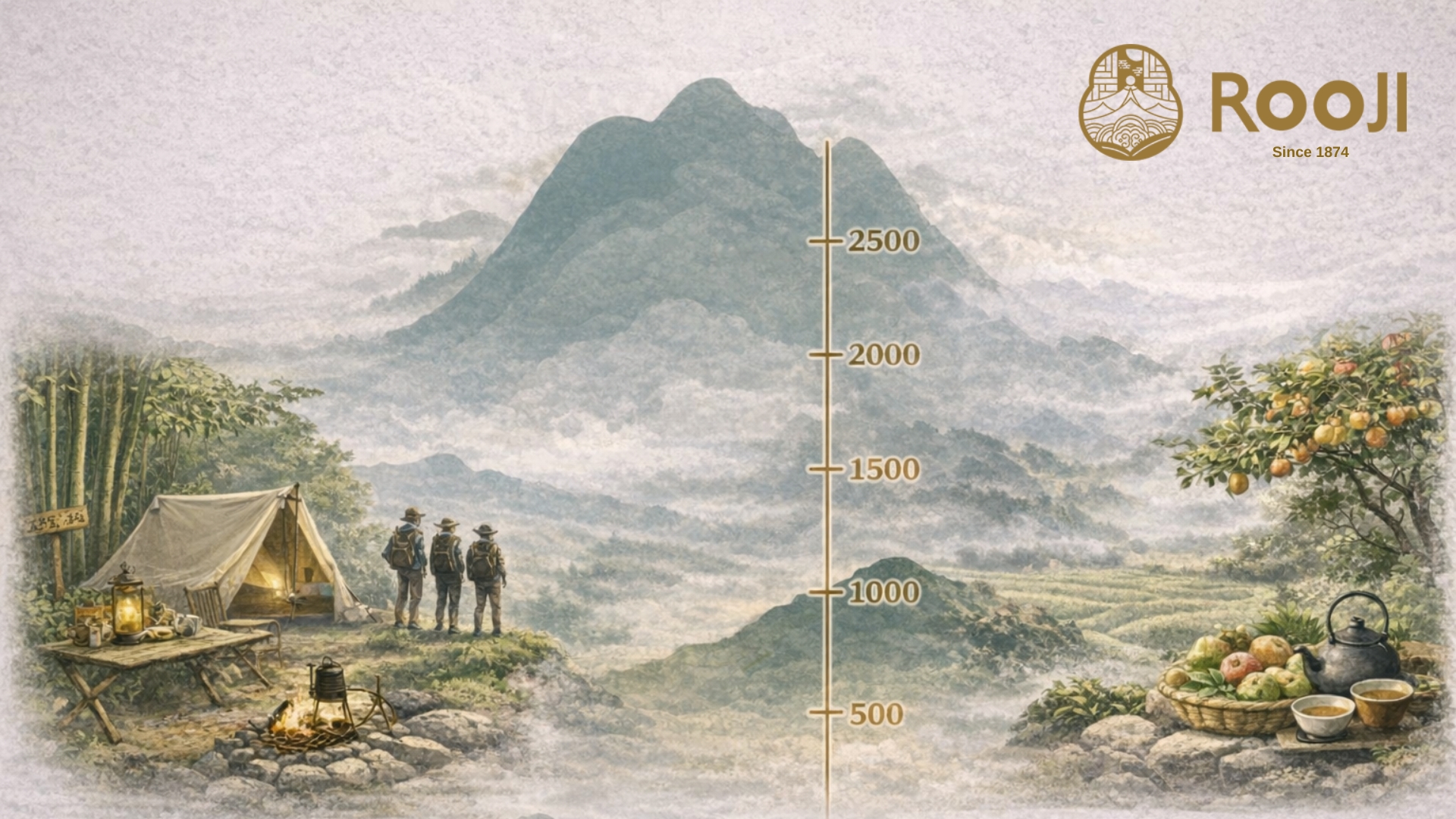
At RooJI (Since 1874), we believe that tea is not just a beverage; it is a conversation between the land and the sky. Our selection is defined by three elements that shape the soul of Taiwanese tea: the Mist that nurtures tenderness, the Mountain that instills character, and the Memory of craftsmanship that spans generations.
What You Will Learn
I. MIST (The Atmosphere)
The breath of the high mountains.
In the high-altitude regions of Lishan and Shanlinxi, the sun is a fleeting guest. For much of the day, the tea gardens are bathed in Yun Wu — a thick, rolling sea of clouds and mist. This is nature’s natural filter.
Softened Light: The mist diffuses sunlight, preventing bitter compounds from forming in the leaf. Instead, the plant produces high levels of theanine and pectin, creating that signature "creamy" mouthfeel.
Morning Dew: In Shanlinxi, the cool moist air, filtered through surrounding bamboo and cedar forests, infuses the leaf with a "Forest Spirit" (Shan Tou Qi)—a crisp, clean finish that feels like inhaling mountain air.
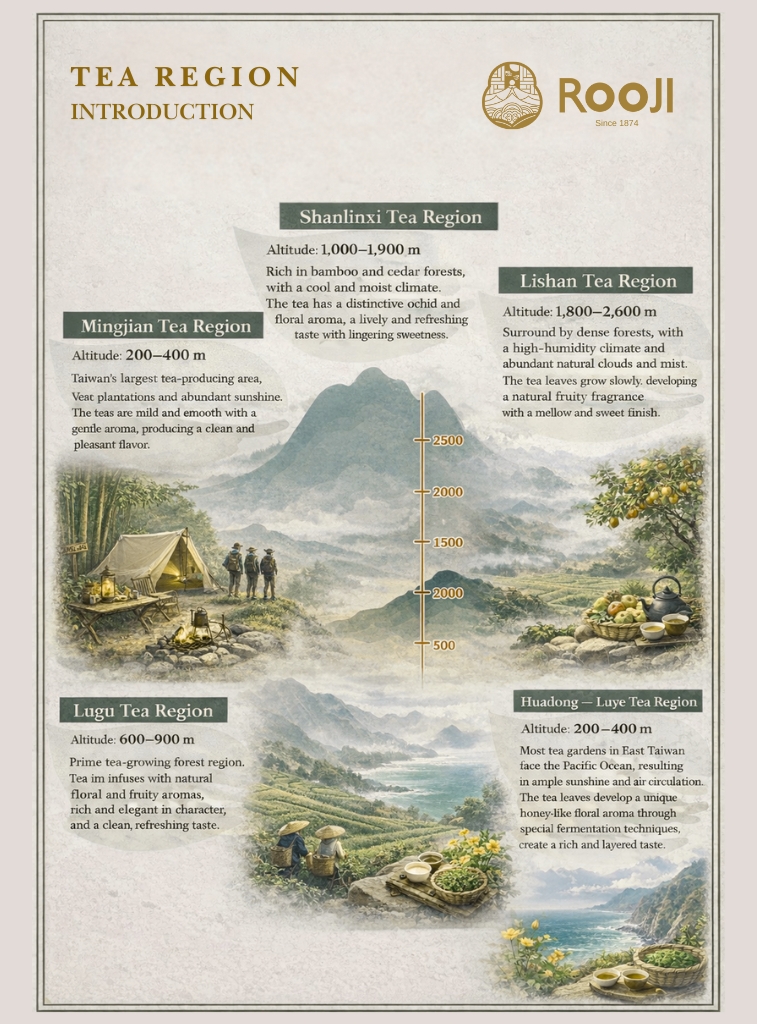
The Lishan Ghost: At 2,600 meters, the mist is so cold it slows the tea's growth to a crawl. The result is a leaf of incredible density, exploding with notes of snow pear and alpine orchids when steeped.
II. MOUNTAIN (The Terroir)
The distinct voice of the soil.
Every altitude tells a different story. The dramatic verticality of Taiwan’s geography allows us to offer a spectrum of flavors, measured in meters above sea level.
The Summit (1,800m+):
Lishan: The "King of Teas." The harsh, cold environment forces the plant to fight for survival, storing vast amounts of sugar and nutrients. The taste is ethereal, sweet, and lingers in the throat for minutes after the sip.
The Cloud Belt (1,000m – 1,900m):
Shanlinxi: Known as the "Fir Forest" terroir. The roots of these tea bushes mingle with the roots of ancient conifers, lending the tea a unique woody, resinous sweetness that is impossible to replicate elsewhere.
The Foothills & Valley (200m – 900m):
Lugu: The traditional heartland. Here, the "Mountain Rhythm" is heavier. The terroir produces a leaf that stands up well to roasting, creating the rich, nutty, and toasted profiles of classic Dong Ding style oolongs.
Mingjian: Where the sun strikes the red soil. These teas are robust, grassy, and full of the warmth of the lower slopes—an honest, refreshing daily luxury.
Huadong (Luye): The outlier. Facing the Pacific Ocean, these gardens breathe salty sea air and enjoy ample sunshine. This unique rift valley terroir is the birthplace of Red Oolong—famous for its natural honey-like aroma and ripe fruit sweetness.
III. MEMORY (The Heritage)
Since 1874.
"Mist" and "Mountain" are nature’s work; "Memory" is ours.
The Taste of Time: Tea has the power to unlock memory. A sip of roasted Lugu oolong recalls the charcoal fires of old tea masters. The floral high notes of Lishan capture the fleeting freshness of a spring morning frozen in time.
The RooJI Legacy: Since 1874, we have witnessed the tea mountains change, yet the spirit remains the same. The camping tent in the valley, the tea picker in the field, and the kettle boiling on the stove connect the modern adventurer with the ancient artisan.
The Aftertaste (Hui Gan): The true memory of a tea is not the first sip, but the sweetness that returns (Hui Gan) long after the cup is empty. It is a sensory memory that beckons you to return to the mountains.
